Article: Dev Deepawali 2026 in Varanasi: Date, Famous Ghats, Travel Guide & What to Wear
Dev Deepawali 2026 in Varanasi: Date, Famous Ghats, Travel Guide & What to Wear
01. Dev Deepawali: Why Banaras Celebrates a Second Diwali
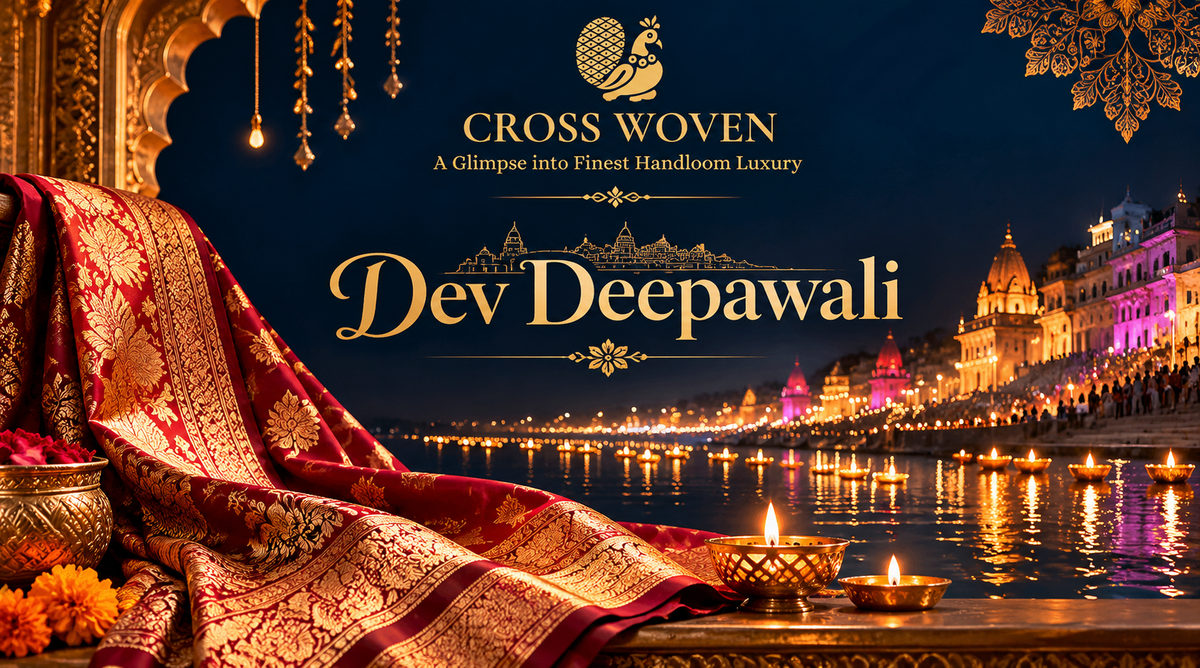
Imagine thousands of earthen diyas illuminating the ghats of the Ganga, temple bells echoing through the lanes and the river reflecting countless little flames. This is Banaras on Dev Deepawali, a celebration that transforms the entire city into a beautiful sight.
Often called the Diwali of the Gods, Dev Deepawali is celebrated on Kartik Purnima, the full moon night of the Hindu month of Kartik, fifteen days after Diwali.
According to Hindu mythology, this day marks Lord Shiva's victory over Tripurasura, a powerful demon who ruled three celestial cities. Lord Shiva destroyed the three cities with a single divine arrow, earning the name Tripurantaka.
There is another beautiful belief associated with this night. It is believed that the gods descend to Earth to bathe in the sacred waters of the Ganga. Kashi, the city of Lord Shiva, holds special significance during this occasion.
The highlight of the celebration is Deep Daan, the offering of earthen lamps to Maa Ganga. As evening approaches, devotees light thousands of diyas along the ghats, temples and riverbanks. The illuminated riverfront creates a beautiful sight that attracts visitors from across India and beyond.
For the people of Banaras, Dev Deepawali is more than a festival of lights. It brings together religious traditions, local communities and visitors who gather along the Ganga to witness the beauty of thousands of illuminated diyas. It is a night that reflects the city's deep connection with its spiritual roots and cultural traditions.
02. When Is Dev Deepawali 2026? Date, Timings & Important Details
24 November 2026
If you are planning to witness Dev Deepawali in Varanasi this year, mark your calendar. The festival will be celebrated on Tuesday, 24 November 2026, on the occasion of Kartik Purnima.
Here are the important dates and timings according to the Varanasi Panchang.
|
Important details |
Timings |
|
Festival date |
Tuesday, 24 November 2026 |
|
Purnima Tithi begins |
23 November, 11:42 PM |
|
Purnima Tithi ends |
24 November, 8:23 PM |
|
Pradoshkal Muhurat |
5:08 PM – 7:47 PM |
All timings are local Indian time (IST). Verify the Panchang details with a reliable Varanasi source before publication.
If you are planning to attend Dev Deepawali in Varanasi, remember that the religious muhurat and public celebration schedules are two different things. The main lamp-offering rituals take place around the Pradosh period, while Ganga Aarti arrangements and cultural programmes may follow separate schedules. Check local announcements before making your travel plans.
Why Is Dev Deepawali Celebrated on Kartik Purnima?
Hindu festivals often follow the lunar calendar, which is why their dates change according to the Gregorian calendar.
Dev Deepawali is celebrated on Kartik Purnima, the full moon day of the Hindu month of Kartik. According to Hindu belief, this day marks Lord Shiva's victory over Tripurasura and is considered an auspicious occasion for prayers, bathing in sacred rivers and offering lamps.
Diwali vs Dev Deepawali: What's the Difference?
Although both festivals celebrate the triumph of light, their significance is different.
Diwali falls on Amavasya, the new moon night, and is associated with Lord Rama's return to Ayodhya. Dev Deepawali follows approximately fifteen days later, on Kartik Purnima. It commemorates Lord Shiva's victory over Tripurasura and is associated with the belief that the gods descend to bathe in the Ganga.
What Happens on Dev Deepawali?
Morning – Kartik Snan

The day begins early, with devotees visiting the Ganga for a holy dip known as Kartik Snan. Temples welcome devotees for prayers, and the ghats gradually become busy with religious rituals.
Evening – Deep Daan & Ganga Aarti
 As evening approaches, thousands of diyas are lit along the ghats, temples and riverbanks. Devotees offer prayers to Maa Ganga, while the grand Ganga Aarti adds to the spiritual atmosphere.
A Little Local Advice
If you are visiting Banaras specifically for Dev Deepawali, don't plan to reach the ghats just before sunset. The city gets exceptionally crowded, and traffic restrictions can make the final stretch a long walk.
Try to reach your chosen viewing area by 2–3 PM, keep your belongings light and decide your return route beforehand. If you are planning a boat ride, arrange it with a reliable operator in advance.
03. The Best Ghats to Experience Dev Deepawali in Banaras
 Dev Deepawali is celebrated across the famous ghats of Varanasi, with thousands of earthen lamps illuminating the riverfront along the Ganga. From Assi Ghat to Dashashwamedh and the historic ghats of the old city, each location offers a different way to experience the festival.
If you are visiting for the first time, choosing the right ghat can make your evening more enjoyable.
Here are five ghats worth knowing about before you head out.
1. Dashashwamedh Ghat – For the Grand Ganga Aarti

If there is one place that captures the grandeur of Dev Deepawali, it is Dashashwamedh Ghat. Famous for its elaborate Ganga Aarti, this is where the evening takes on an especially devotional atmosphere.
Expect beautifully illuminated steps, priests performing elaborate rituals, temple bells and enormous crowds gathered along the riverfront.
Local tip: If witnessing the main Ganga Aarti is your priority, arrive several hours early and be prepared for restricted movement.
2. Assi Ghat – For a Different Side of Banaras
 Located towards the southern end of the ghats, Assi has its own distinct character. Known for its morning Subah-e-Banaras rituals and lively surroundings, it offers a different experience from the bustling central ghats.
Explore the surrounding lanes and cafés, but remember that Assi also attracts large crowds on Dev Deepawali.
3. Chet Singh Ghat – For History & Architecture

With its imposing fort-like structure overlooking the Ganga, Chet Singh Ghat has a character of its own. Its historic architecture makes it one of the most visually striking stretches of the riverfront.
It is also a location associated with special light and sound presentations during Dev Deepawali, although programmes and viewing arrangements can vary each year.
4. Panchganga Ghat – For a Traditional Experience

Panchganga Ghat is among the spiritually significant ghats of Kashi. Associated with the confluence of five sacred rivers in Hindu belief, it carries a deeply devotional character.
For visitors interested in the religious and traditional side of Dev Deepawali, rather than only the grand spectacle, this ghat is worth exploring.
5. Namo Ghat – For a Contemporary Riverfront Experience

A more recently developed addition to Varanasi's riverfront, Namo Ghat offers a different setting from the city's older stone ghats.
With its modern infrastructure and open riverfront spaces, it is another location to consider when planning your visit. Check the local event and access arrangements before heading there.
So, Which Ghat Should You Choose?
The honest advice? Don't try to cover all five ghats in one evening.
The riverfront may look continuous on a map, but on Dev Deepawali, large crowds, barricades and traffic restrictions can make moving between locations difficult.
-
For the grand Ganga Aarti: Dashashwamedh Ghat.
-
For a southern riverfront experience: Assi Ghat.
-
For historic architecture: Chet Singh Ghat.
-
For a traditional spiritual atmosphere: Panchganga Ghat.
-
For a modern riverfront setting: Namo Ghat.
Find your spot, watch the diyas light up the river and let Banaras unfold in front of you. Sometimes, the best way to experience this city is simply to slow down.
04. Boat Ride or Ghat Experience: Which Should You Choose?
 If there is one experience you shouldn't miss during Dev Deepawali, it is seeing the illuminated ghats of Banaras after sunset. But there is one question almost every visitor has: should you watch the celebrations from a boat or experience them on foot?
Both offer completely different perspectives of the city.
A Boat Ride – For the View of a Lifetime
Imagine sailing along the Ganga as thousands of diyas illuminate the steps of the ghats, with temples and historic buildings glowing against the night sky.
A boat ride gives you a panoramic view of the celebrations, allowing you to take in the scale of Dev Deepawali from the river itself. It is particularly beautiful for photography and for visitors who want to see different stretches of the riverfront.
A few things to remember:
-
Book through a verifiable boat operator.
-
Confirm your departure ghat, ride duration and boat type beforehand.
-
Agree on the complete price before boarding.
-
Ask about festival-specific timings, access restrictions and safety arrangements.
Don't assume boats can move freely along the entire riverfront. Special arrangements and restrictions may apply on Dev Deepawali.
Walking Along the Ghats – For the Real Banarasi Experience

If you want to experience Dev Deepawali up close, walking along the ghats is equally special.
You'll see families offering diyas to Maa Ganga, devotees performing rituals, priests preparing for the evening Aarti and countless little lamps illuminating the stone steps.
There's something beautiful about being among the people rather than simply watching the celebration from a distance.
Local tip: Wear comfortable footwear, carry minimal belongings and be prepared for large crowds. Some stretches may have barricades or restricted access, so follow the local administration's directions.
Rooftop Viewing – For a Different Perspective
Several hotels, guesthouses and restaurants overlooking the Ganga offer rooftop or terrace views. This can be a more relaxed way to admire the illuminated riverfront, especially for families or visitors who find navigating crowded ghats difficult.
However, access may be restricted to hotel guests or ticket holders, and views vary depending on the property's location.
If you're considering this option, confirm the actual river view, entry arrangements and booking terms in advance.
So, What's the Best Way to Experience Dev Deepawali?
There isn't one right answer.
-
Choose a boat ride if you want a panoramic view of the illuminated riverfront.
-
Choose the ghats if you want to experience the rituals, people and devotional atmosphere up close.
-
Choose a rooftop if you prefer a more comfortable viewing experience.
The best choice depends on your preferences, budget and the arrangements available on the day. Plan ahead and enjoy the celebration at your own pace.
05. What to Eat in Banaras During Dev Deepawali
A visit to Banaras is incomplete without exploring its local food. The city's food culture is closely connected to its old markets, traditional shops and everyday lifestyle.
During Dev Deepawali in November, visitors can enjoy several local favourites, including spicy chaat, traditional breakfasts and seasonal winter sweets.
Here are six dishes worth trying during your visit.
1. Kachori Sabzi – The Classic Banarasi Breakfast A morning in Banaras often begins with a plate of hot kachoris served with flavourful aloo sabzi. Crispy, generously filled and usually accompanied by jalebi, this breakfast combination is a favourite among locals.
Local tip: Go early in the morning. Popular breakfast spots get busy quickly, and the freshly prepared batches are worth trying.
2. Tamatar Chaat – Banaras on a Plate
 Unlike the usual chaat you'll find elsewhere, Banarasi tamatar chaat has its own distinct personality.
Made with mashed tomatoes, spices, potatoes and a generous topping of chutneys and other accompaniments, it is tangy, spicy and wonderfully comforting.
Often served in a small kulhad, it is one of those street-food experiences you shouldn't leave Banaras without trying.
3. Chooda Matar – A Winter Favourite
 November brings the beginning of the season for one of Banaras's most loved winter snacks: chooda matar.
Made with flattened rice, fresh green peas, spices and often a touch of ghee, this simple preparation is full of flavour. Look out for it at traditional food shops and street stalls during your visit.
4. Malaiyyo – A Sweet Treat That Disappears with Winter
 If you're visiting Banaras in winter, keep an eye out for Malaiyyo.
This delicate, airy dessert is made by preparing milk and allowing it to develop a light, frothy texture in the winter air. It is gently flavoured with saffron and cardamom and often garnished with nuts.
Served in small earthen kulhads, it practically melts in your mouth.
Local tip: Malaiyyo is highly seasonal and is generally available during cooler winter months, especially in the mornings. Availability can vary.
5. Banarasi Paan – An Essential Part of the Experience

No visit to Banaras is complete without trying its famous paan.
More than just a mouth freshener, Banarasi paan is part of the city's social and cultural identity. Prepared with betel leaves and a combination of traditional fillings, it is a familiar ending to a meal and a little ritual in itself.
Ask for a meetha paan if you prefer something sweet.
6. Lassi & Traditional Sweets – Something for Your Sweet Tooth
 Banaras is equally famous for its thick, creamy lassi, traditionally served in kulhads and often topped with a generous layer of malai.
While exploring the old lanes, look out for traditional sweets such as launglata, rabri and peda. Each has its own flavour and place in the city's food culture.
A Little Local Advice Before You Go Food-Hopping
Dev Deepawali is one of the busiest times of the year in Banaras. Popular food shops, especially around Godowlia and the old city, can have long queues.
A few things to keep in mind:
-
Visit popular food shops during non-peak hours whenever possible.
-
Don't plan your entire food trail around one famous shop.
-
Try smaller traditional establishments too.
-
Carry some cash for local vendors.
-
Prefer freshly prepared food and sealed drinking water.
And one last thing: leave some room for an extra plate of chaat. In Banaras, that's almost inevitable!
06. What to Wear in Banaras During Dev Deepawali: A Little Styling Guide
Dev Deepawali is a special occasion to experience the cultural beauty of Banaras, and dressing up can be part of that experience.
Whether you are attending the Ganga Aarti, exploring the old markets or enjoying the illuminated ghats, traditional Indian clothing feels right at home in the city.
Banarasi silk sarees, lightweight organza drapes and beautifully woven dupattas are some lovely choices for the evening.
Since the festival involves walking through crowded lanes and uneven ghat steps, choose an outfit that looks festive and feels comfortable.
For Women: Let Banarasi Textiles Take Centre Stage
1. The Classic Banarasi Silk Saree
You can hardly go wrong with a Banarasi silk saree in Banaras. Think rich Katan silks, intricate zari work, traditional floral motifs and beautiful brocade borders.
Whether you choose classic red, deep wine, emerald green or understated ivory, a Banarasi saree feels right at home in the city.
Explore our Banarasi Saree Collection for traditional designs suitable for festive occasions.
2. Organza & Tissue Sarees for a Lighter Look
If you prefer something less traditional but equally festive, opt for a lightweight organza or tissue saree. Their subtle sheen and delicate textures look particularly beautiful against the warm glow of the diyas.
Explore Organza Sarees and tissue saree styles for a lighter festive look. Confirm the exact collection URL before publishing the tissue link.
3. A Banarasi Dupatta with a Simple Suit
Not every festive outfit needs to be elaborate. A beautifully woven Banarasi dupatta paired with a simple silk, cotton or solid-coloured suit can make just as much of a statement.
It is a good choice if you want to enjoy the celebrations without carrying the weight of a heavy saree.
For Men: Keep It Classic
A silk kurta paired with straight trousers or churidars is a timeless choice. You could also experiment with a Banarasi brocade Nehru jacket for a more dressed-up look.
A Few Things a Local Would Tell You
-
Choose comfortable flats, juttis or sandals rather than elaborate heels.
-
Carry a light shawl or stole. November evenings can get chilly, particularly near the river.
-
Avoid excessively long or heavy outfits if you plan to walk through the old city.
-
Keep jewellery and accessories practical, especially in crowded areas.
At Crosswoven, we bring together the textile traditions of Banaras through sarees, dupattas and other Indian fabrics. If you are visiting the city for Dev Deepawali, explore our collection of Banarasi silks, organza and tissue sarees to find an outfit that reflects the festive spirit of the occasion.
Discover Banarasi textiles at Crosswoven.
07. A Banarasi's Guide to Exploring the City Beyond the Ghats
Most people come to Banaras for the Ganga, the temples and, of course, Dev Deepawali. But ask someone who belongs to this city, and they'll tell you that there is an entirely different Banaras waiting to be discovered beyond the riverfront.
It lives in the narrow lanes, bustling bazaars, centuries-old temples, little food shops and the rhythmic sound of handlooms working in the background.
If you have some extra time during your visit, here are a few places worth exploring.
1. Kashi Vishwanath Temple – The Spiritual Heart of Kashi
No visit to Banaras is complete without seeking blessings at Kashi Vishwanath Temple, one of the twelve Jyotirlingas dedicated to Lord Shiva.
Located in the heart of the old city, the temple and its surrounding corridor offer a glimpse into the deep spiritual connection between Kashi and Mahadev.
Local tip: Festival periods can mean significant crowds. Check the temple's official website for darshan timings, entry arrangements and booking information before visiting.
2. Godowlia Market – Where Old Banaras Comes Alive
If you want to experience the city's everyday energy, head towards Godowlia.
One of the busiest market areas in Banaras, it is filled with shops selling clothing, jewellery, accessories, religious items and everyday essentials. The surrounding lanes are also dotted with food stalls and traditional sweet shops.
It's chaotic, colourful and unmistakably Banarasi.
Local tip: Walk around rather than planning to drive through the market. During Dev Deepawali, traffic restrictions and crowds can make access difficult.
3. Thatheri Bazaar – A Glimpse into Traditional Banaras
For those who enjoy exploring old markets, Thatheri Bazaar is worth a visit. Known for its traditional metalware trade, the area reflects the city's long-standing association with craftsmanship and skilled artisans.
As you wander through its narrow lanes, you'll find shops and workshops that preserve traditional trades passed down through generations.
4. The Old Lanes of Banaras – Take the Scenic Detour
Sometimes, the best way to discover Banaras is to put away the map and simply explore its old neighbourhoods.
From little shrines tucked between buildings to traditional sweet shops, flower sellers, local homes and centuries-old architecture, every lane has a story.
You may find a shop selling beautiful brassware, a musician practising in a quiet corner or a food vendor preparing a local delicacy.
Just remember to be respectful of residents and avoid photographing people or private spaces without permission.
5. Discover the Weaving Heritage of Banaras
Here's something that often gets overlooked: Banaras is not just a city of temples. It is also one of India's most celebrated centres of handloom weaving.
For generations, its skilled weavers have created exquisite textiles using techniques that require patience, precision and an understanding of traditional looms.
The Banarasi saree is perhaps the most recognisable example, known for its intricate brocades, zari work, floral patterns and traditional motifs.
Visitors interested in Banarasi textiles can learn about the different weaving techniques, silk fabrics and traditional motifs used by local artisans. Understanding how these sarees are designed and woven offers a different perspective on the city's cultural heritage.
At Crosswoven, this is the Banaras we are especially connected to, a city where craftsmanship continues through generations.
So when you visit Banaras, don't just see its monuments. Take the time to discover the people and crafts that make the city what it is.
08. Things You Should Know Before Visiting Banaras for Dev Deepawali
Dev Deepawali is undoubtedly one of the most spectacular times to visit Banaras. But with thousands of visitors arriving to witness the celebrations, a little planning can make your experience considerably smoother.
Here are a few things worth knowing before you pack your bags.
Your Dev Deepawali Travel Checklist
1. Book Your Stay in Advance
Accommodation near the ghats and popular tourist areas gets booked quickly during Dev Deepawali. Make your reservations well in advance and confirm the exact location, especially if you plan to stay in the old city.
2. Reach the Ghats Early
Don't expect to arrive just before sunset and find a comfortable viewing spot. Popular ghats get crowded well before the evening celebrations begin. Plan to reach your chosen location by the afternoon.
3. Be Prepared for Traffic Restrictions
Several roads around the ghats and old city may have diversions, barricades or pedestrian-only access during the festival.
Check the latest local traffic advisories and be prepared to walk.
4. Decide on a Meeting Point
If you're travelling with family or friends, decide on a fixed meeting point in case anyone gets separated. Mobile networks and communication can become difficult in extremely crowded areas.
5. Carry Only What You Need
Keep your belongings light. Carry some cash, a charged phone, essential medicines if required and a small bottle of water. Avoid carrying unnecessary valuables.
6. Check Official Announcements
Festival arrangements, boat access, traffic restrictions and event schedules can change from year to year.
Before heading out, check the latest announcements from the Varanasi district administration, local police and tourism authorities.
You can also visit Incredible India for tourism information.
7. Respect Local Customs and Rituals
Remember that Dev Deepawali is a religious occasion for many residents. Avoid obstructing people performing Deep Daan, respect temple rules and seek permission before photographing individuals or religious ceremonies.
8. Keep the Ghats Clean
The Ganga and its ghats are sacred to millions. Avoid throwing plastic, food wrappers or other waste into the river. Dispose of your waste responsibly and respect the surroundings.
Dev Deepawali attracts large crowds, so planning a few things in advance can make your visit easier. Keep your travel schedule flexible, follow local instructions and allow enough time to reach your chosen ghat.
Most importantly, respect the religious significance of the celebration and the people who call Banaras home.
09. The Banarasi Soul: Why the City Is More Than Its Ghats
Beyond its temples, ghats and religious celebrations, Banaras has another identity that deserves attention: its handloom heritage.
For generations, local weavers have created Banarasi textiles that are recognised for their silk fabrics, intricate patterns and traditional weaving techniques. This craft remains an important part of the city's cultural and economic life.
The Legacy of Banarasi Silk
Few Indian textiles carry the cultural significance of a Banarasi saree. Traditionally associated with weddings, festivals and important celebrations, these sarees have long held a special place in Indian wardrobes.
Their appeal lies in the richness of their silk, intricate zari work, elaborate brocades and timeless motifs.
From traditional floral patterns and paisleys to elaborate jaals and meenakari detailing, every design reflects the artistry of its makers.
Some techniques that make Banarasi textiles particularly special include:
Kadhwa: A traditional weaving technique in which motifs are individually woven into the fabric, giving them a distinct finish.
Zari: Fine metallic threads, traditionally made with precious metals or their imitations, used to create intricate patterns and borders.
Meenakari: A technique involving the use of coloured threads alongside zari to create detailed, colourful motifs.
Brocade: A richly patterned fabric in which decorative designs are woven into the textile rather than simply printed or embroidered onto it.
These techniques require considerable skill, patience and an understanding of the loom that takes years to develop.
A Craft Passed Down Through Generations
Behind every Banarasi textile is a story of the people who make it.
Weaving knowledge is often passed down within families, with generations of artisans preserving techniques, patterns and design traditions.
The process involves far more than operating a loom. It requires an understanding of yarn, motifs, colour combinations, weaving structures and the precision needed to bring a design to life.
While the craft continues to evolve with changing tastes and contemporary fashion, its foundation remains rooted in traditional workmanship.
Why Banarasi Textiles Are Still Relevant Today
Banarasi textiles have always been closely associated with Indian celebrations, particularly weddings. But their appeal is no longer limited to the traditional saree.
Today, these textiles find their way into suits, dupattas, lehengas, contemporary separates and even fusion silhouettes.
Their versatility allows traditional Indian craftsmanship to become part of everyday wardrobes and modern festive dressing.
When buying Banarasi textiles, it is worth understanding the fabric, weaving technique and craftsmanship behind the piece. Ask about its composition, whether it is handloom or powerloom, the type of zari used and any applicable Silk Mark or handloom certification.
An informed purchase helps you appreciate what you're investing in and make more confident choices.
A Little Piece of Banaras, Woven into Every Thread
Crosswoven is connected to the textile traditions of Varanasi and the craftsmanship behind Banarasi fabrics. Our collections include Katan silk sarees, organza, tissue, georgette and other Indian textiles that bring traditional weaving styles into contemporary wardrobes.
From festive occasions to weddings and everyday celebrations, Banarasi textiles continue to find a place in modern Indian fashion.
As you experience the magic of Dev Deepawali, we invite you to discover another side of Banaras: the Banaras that lives in its looms, its artisans and its textiles.
Because long after the diyas have dimmed and the celebrations have passed, the craftsmanship of this city continues to live on, woven into every thread.
Crosswoven – Woven in Banaras. Rooted in tradition.
Conclusion: Experience the Beauty of Banaras During Dev Deepawali
Dev Deepawali is one of those celebrations that stays with you long after the evening ends. From the illuminated ghats and spiritual rituals to the old markets, traditional food and handloom heritage, every part of Banaras offers something worth experiencing.
Whether you visit for the festival, explore the city's historic lanes or discover its famous textiles, take the time to experience Banaras beyond the usual tourist attractions.
And if you want to take a little piece of the city home, explore the traditional Banarasi textiles at Crosswoven.
Discover the beauty of Banaras. Explore Crosswoven.
10. Frequently Asked Questions About Dev Deepawali in Varanasi
Planning a visit to Banaras for Dev Deepawali? Here are some commonly asked questions to help you prepare for the celebration.
1. What is the date of Dev Deepawali in Varanasi in 2026?
Dev Deepawali will be celebrated on Tuesday, 24 November 2026, on the occasion of Kartik Purnima. The festival takes place fifteen days after Diwali and is marked by prayers, Deep Daan and thousands of illuminated diyas along the Ganga.
2. Why do people celebrate Dev Deepawali in Varanasi?
Dev Deepawali commemorates Lord Shiva's victory over Tripurasura. According to Hindu belief, the gods descend to bathe in the sacred waters of the Ganga on Kartik Purnima, making Banaras an especially significant place to celebrate.
3. Which ghat is best for watching Dev Deepawali in Varanasi?
Dashashwamedh Ghat is particularly popular for its grand Ganga Aarti and illuminated riverfront. Assi, Chet Singh and Panchganga Ghats also offer distinct experiences. Your choice will depend on the atmosphere you prefer and the access arrangements on the day.
4. Can you watch Dev Deepawali from a boat?
Yes. A boat ride offers a panoramic view of the illuminated riverfront and is an additional experience rather than a necessity. You can also enjoy the celebrations directly from the ghats, where you can witness Deep Daan and evening rituals.
5. What is the best time to visit the ghats on Dev Deepawali?
It is advisable to reach your chosen ghat by the afternoon, ideally around 2–3 PM, as popular areas become extremely crowded closer to sunset. Always check local traffic and access advisories before setting out.
6. What should I wear during Dev Deepawali in Varanasi?
Traditional Indian outfits such as Banarasi silk sarees, suits, dupattas and kurtas are lovely choices. However, prioritise comfortable footwear for walking through crowded lanes and uneven ghat steps. Carry a light shawl for cooler November evenings.
7. How many days should I spend in Varanasi during Dev Deepawali?
Two to three days is a good starting point. This gives you time to explore the ghats, visit Kashi Vishwanath Temple, discover the old markets, enjoy local food and experience the festival without rushing.
8. Is Dev Deepawali different from Diwali?
Yes. Diwali is celebrated on Amavasya, the new moon day, while Dev Deepawali takes place on Kartik Purnima, approximately fifteen days later. Diwali celebrates the return of Lord Rama to Ayodhya, while Dev Deepawali is associated with Lord Shiva's victory over Tripurasura.
9. What is Deep Daan during Dev Deepawali?
Deep Daan is the ritual offering of illuminated earthen lamps to the divine. During Dev Deepawali, devotees light thousands of diyas along the ghats, temples and riverbanks, and some offer floating lamps to Maa Ganga.