
About Weaves
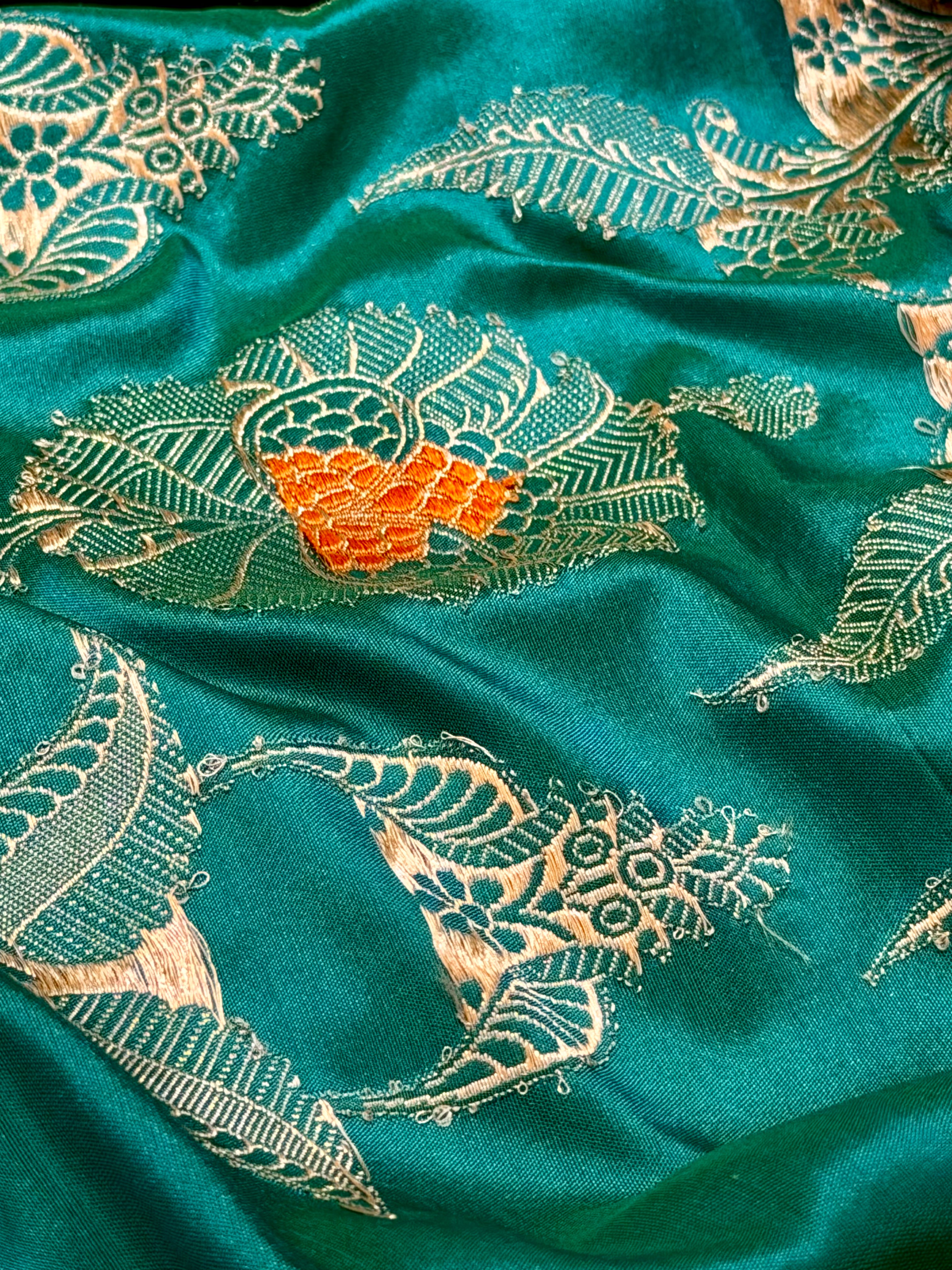
Kadhwa
Kadwa is a highly intricate and labor-intensive weaving technique used to create detailed motifs within the fabric.
This process ensures a clean finish on the reverse side of the fabric, with no loose threads or need for cutting. The motifs appear well-defined, slightly raised, and rich in texture, giving the fabric a distinctive embossed or “kadhua” look.
Kadwa weaving allows for great precision in design, enabling multiple motifs, colors, and textures to be woven into a single fabric. Though time-intensive, it results in a durable and finely crafted textile.
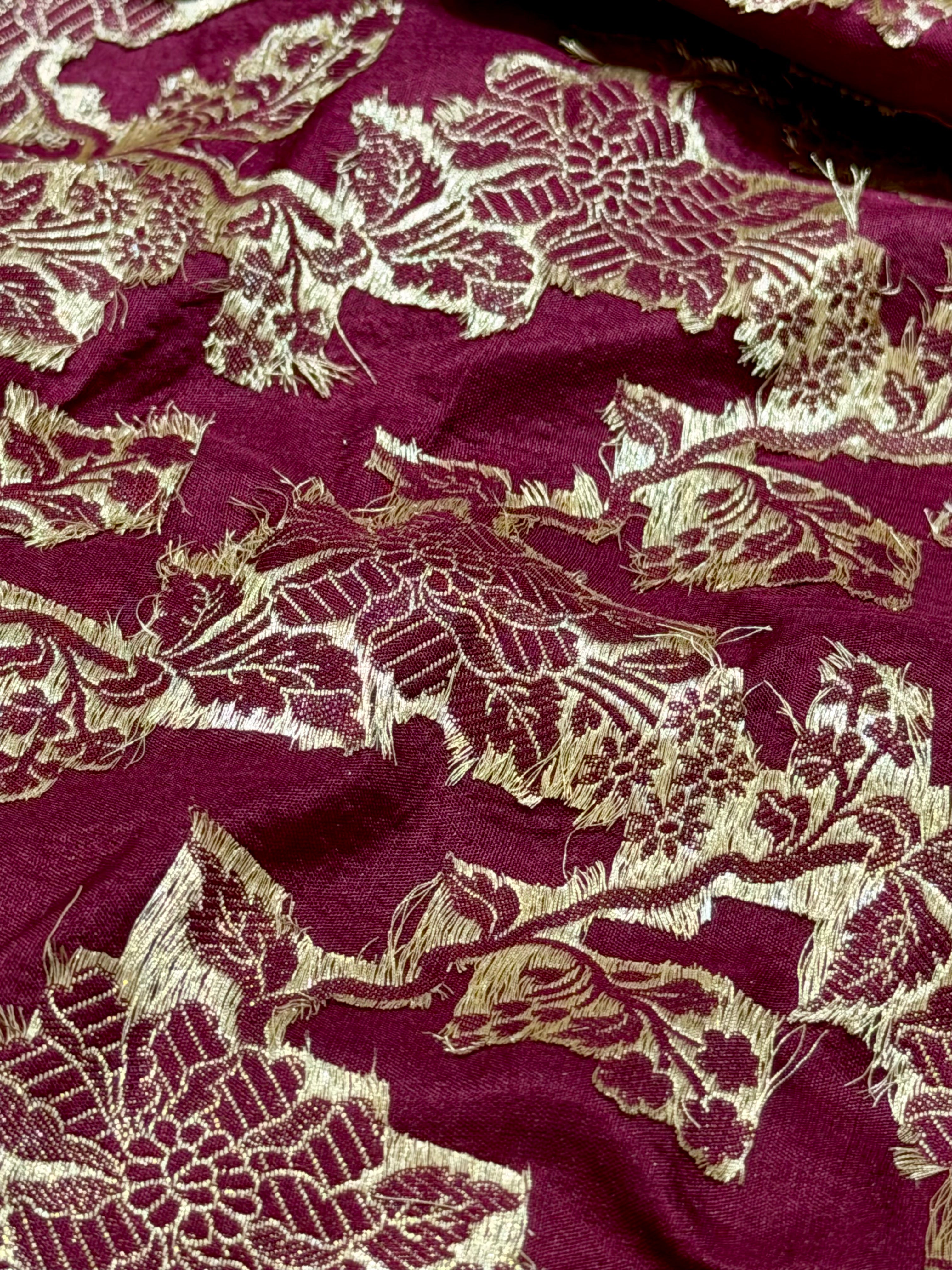
Cutwork
Cutwork is a weaving technique where the loose threads on the reverse side of the fabric are carefully trimmed by hand after the weaving process is complete. This results in a cleaner and neater finish, preventing the threads from catching or tangling during use. The process requires a high level of precision and skilled craftsmanship to maintain the integrity of the design while achieving a refined surface.
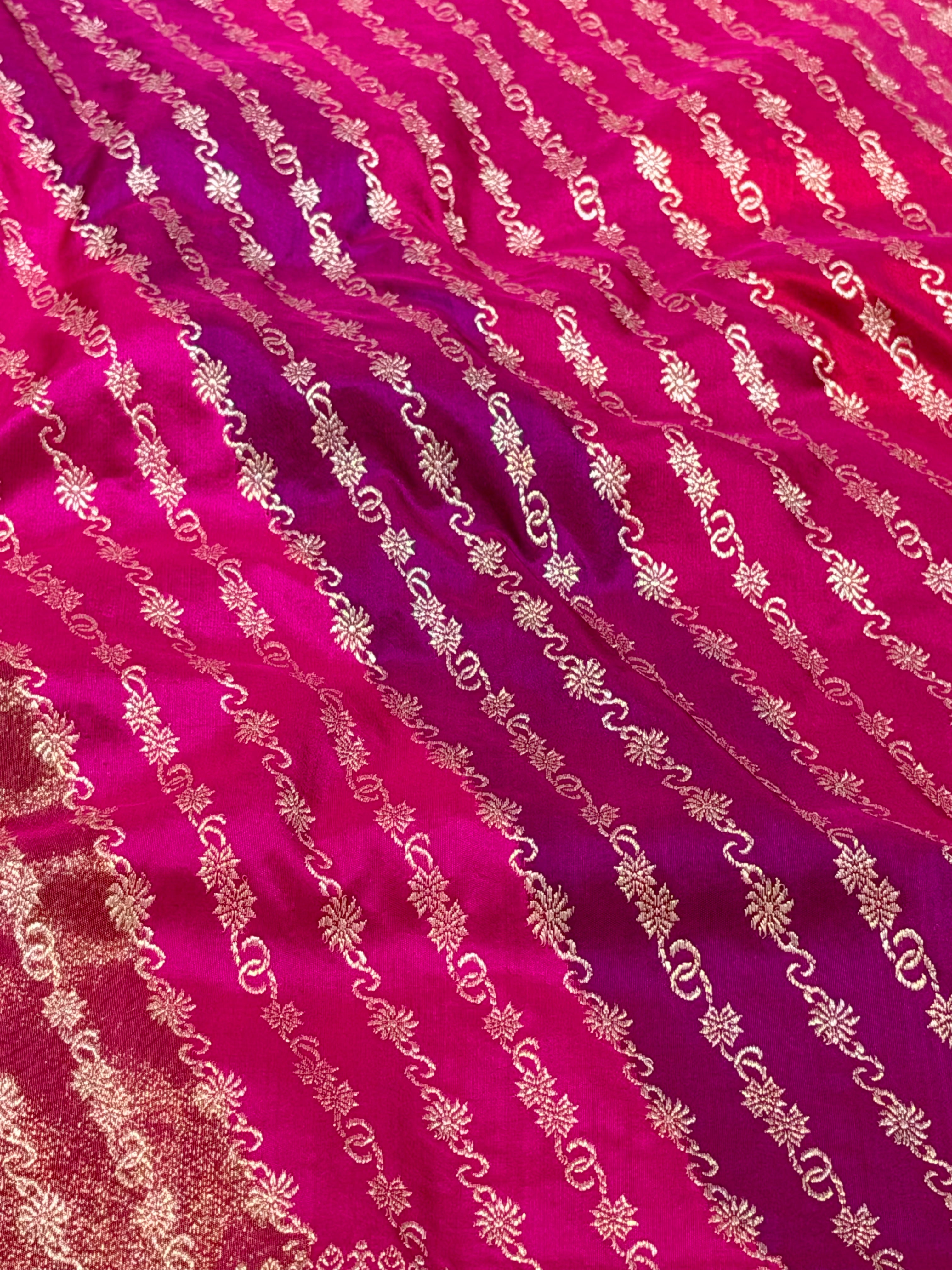
Rangkat
Rangkat is a traditional Banarasi weaving technique that involves the intricate interlocking of yarns with multiple changes in the structural weft to create distinct variations in the base colours of the fabric. This method allows for seamless colour transitions and richly detailed patterns, often featuring floral or geometric motifs. The technique requires a high level of skill and precision, resulting in a fabric that carries depth, vibrancy, and visual drama without adding weight.
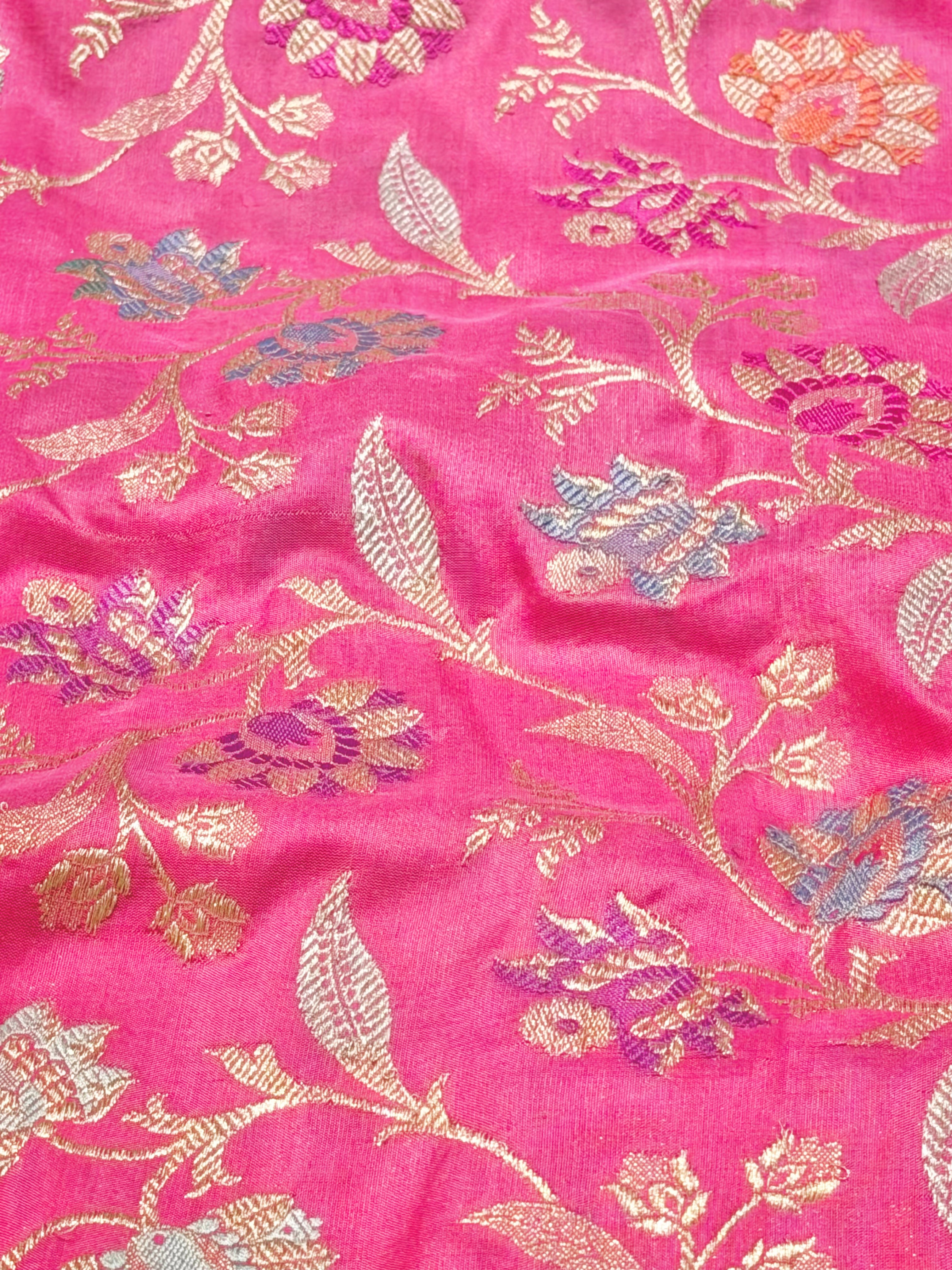
Meenakari
Meenakari is a weaving technique where extra coloured resham threads are added during the weaving process to create multi-colour motifs in the fabric. These coloured threads are carefully inserted along with the main design to enhance the pattern.
This process requires skill and precision to maintain colour balance and detailing within the design. The result is a vibrant and rich look with added depth in the motifs.
Tanchoi
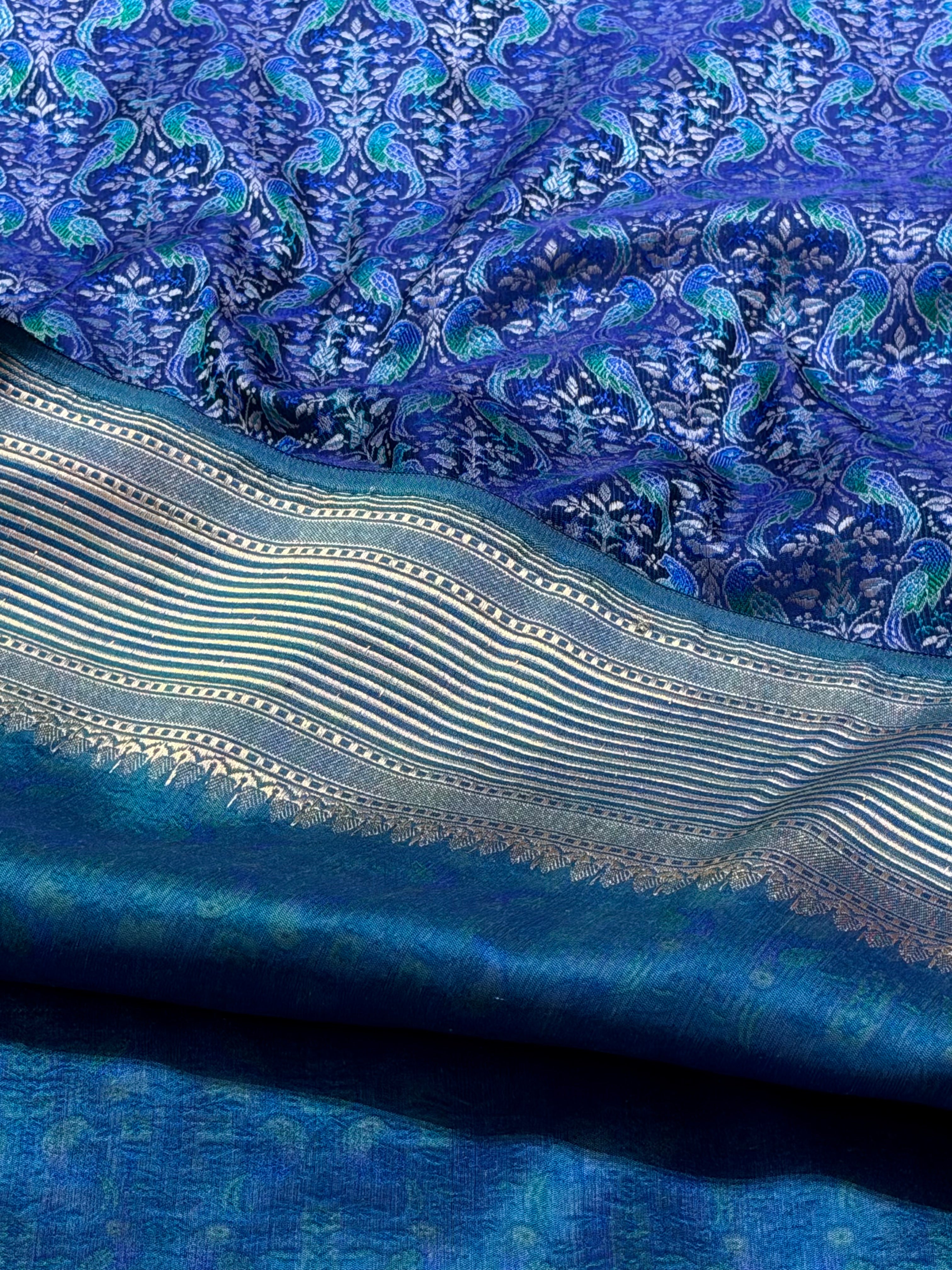
Tanchoi is a warp-faced satin weaving technique crafted using a satin base and multiple colored weft threads that intricately interlace with the warp to create richly patterned fabrics. This method minimizes floats, resulting in a smooth and refined finish on both sides of the fabric, while the interplay of threads produces subtle tonal variations and depth in color. Known for its dense and intricate patterns, Tanchoi reflects fine craftsmanship and detailed artistry.
The weaving creates soft tonal variations and depth in the fabric, giving it a refined and elegant look.
Jangla
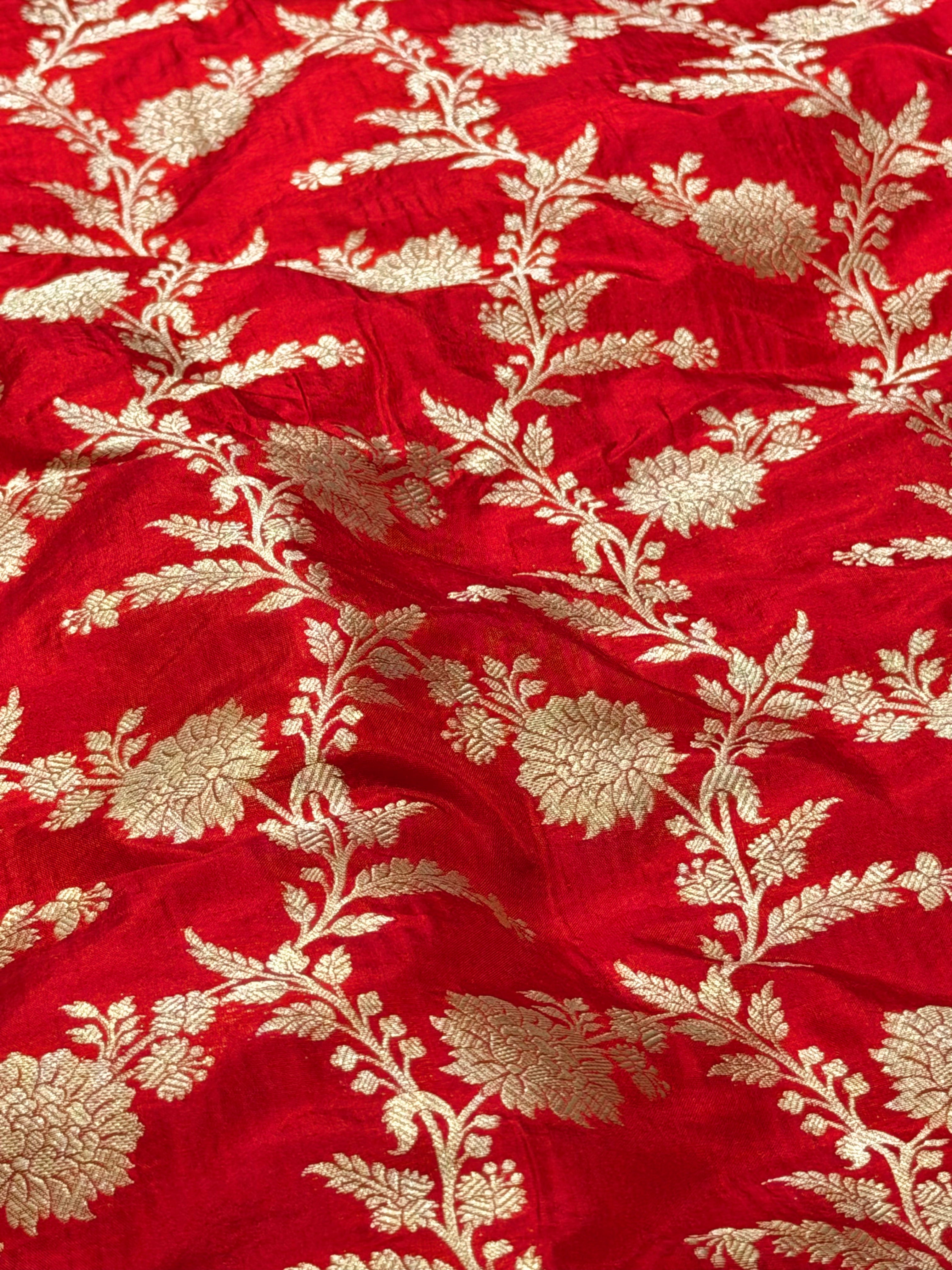
Jangla is a weaving style where continuous patterning is done across the entire fabric to create a dense and rich design. The motifs are spread all over the body, forming a full jaal (all-over pattern).
This type of weaving requires careful handling to maintain consistency in the design across the fabric. The result is a detailed and filled surface with strong visual presence.
Zari Vasket
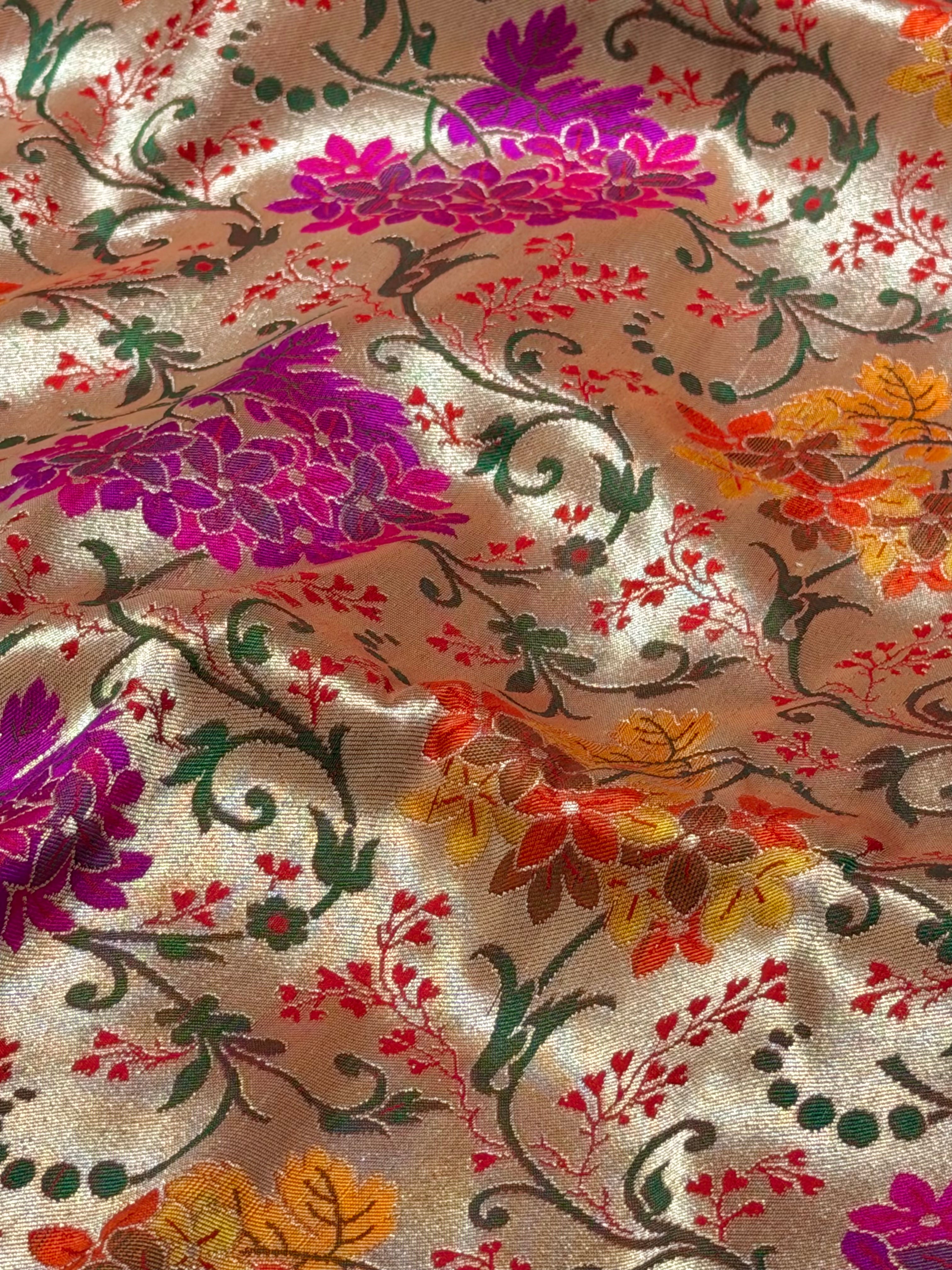
Zari Vasket is a weaving technique where supplementary zari threads are used across the fabric to create an all-over pattern. The zari is woven along with the base threads to give a consistent and rich design throughout the body.
This method results in minimal loose threads on the reverse side and gives the fabric a smooth and lustrous appearance with a strong zari presence.
Jamdani
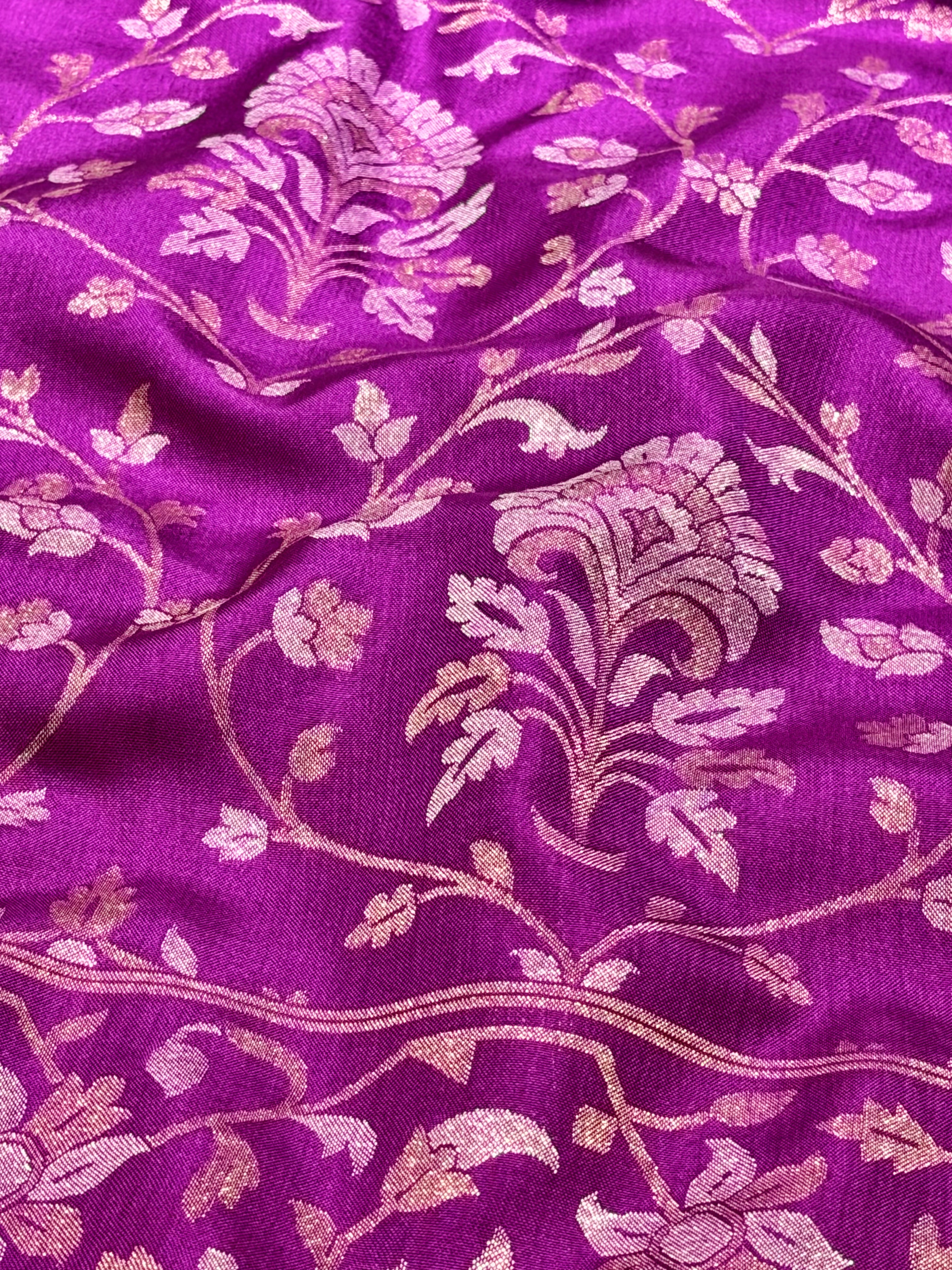
Jamdani is a weaving technique where extra weft threads are inserted by hand into the fabric to create delicate motifs. The design is woven directly into the base fabric, giving it a soft and detailed look.
This process requires high skill and patience, as each motif is added separately during weaving. The result is a lightweight fabric with fine patterns and a clean finish on both sides.
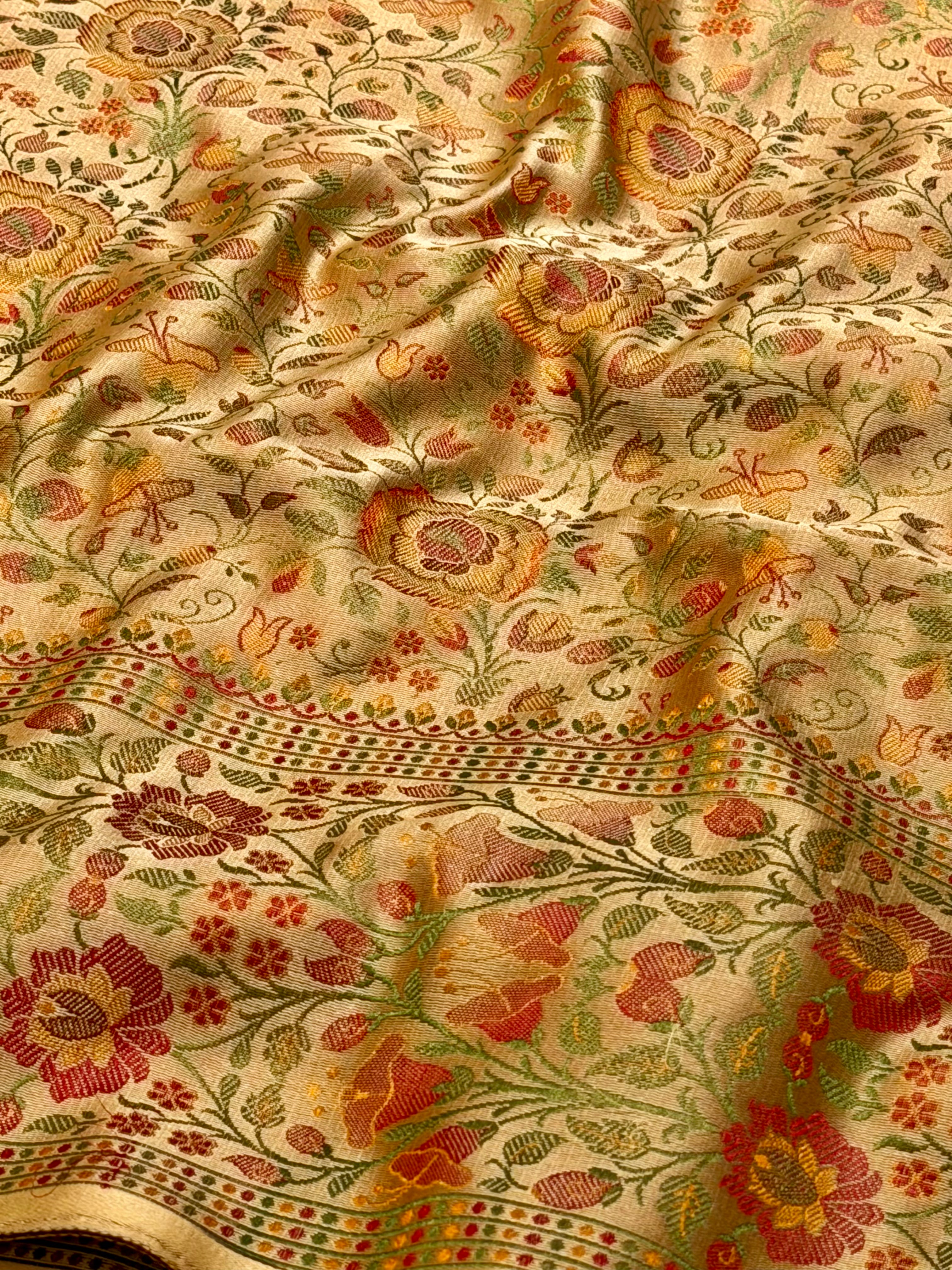
Jamawar
Jamawar is a weaving style where detailed and dense motifs are woven across the entire fabric to create a rich and continuous design. The patterns are formed within the weave itself, giving the fabric a smooth and even finish.
This technique requires careful control during weaving to maintain the detail and consistency of the motifs. The result is a fabric with a heavy design appearance and a refined surface.
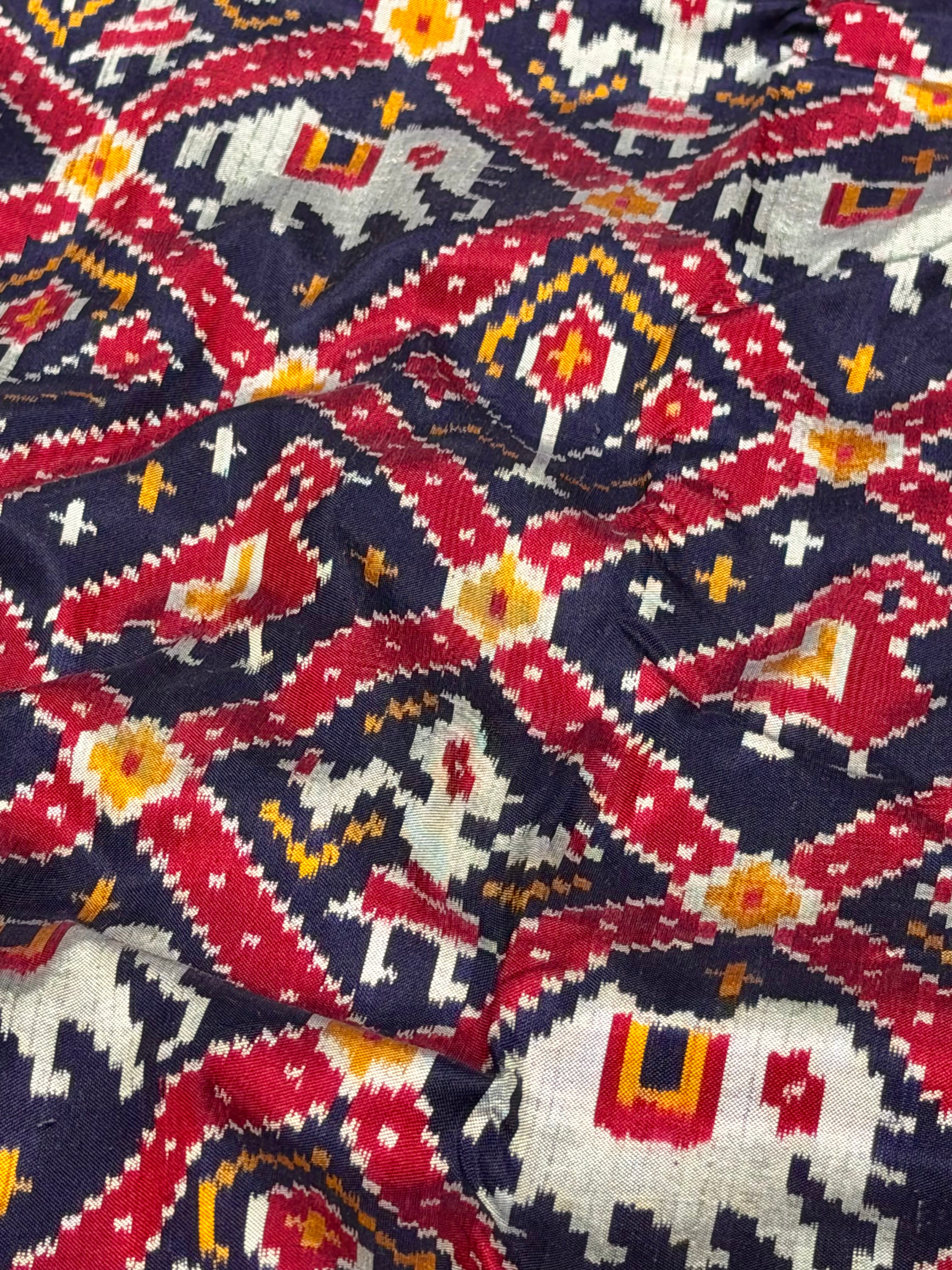
Patola
Patola is a weaving style where coloured yarns are used to create geometric and detailed patterns within the fabric. The design is formed during the weaving process, giving it a clear and structured look.
This requires careful alignment of threads to maintain the pattern and symmetry across the fabric. The result is a design with strong visual balance and sharp detailing.
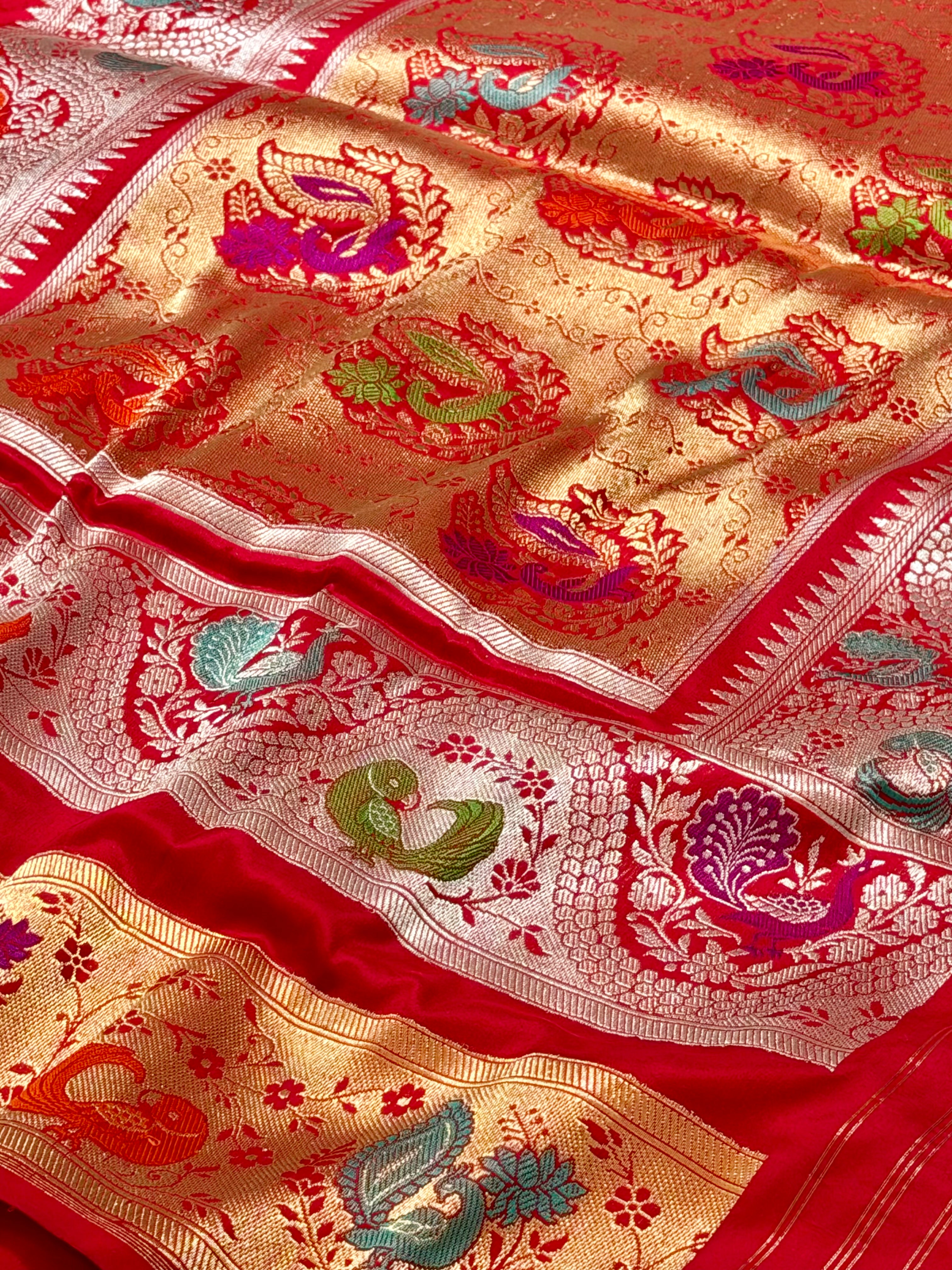
Baluchari
Baluchari is a weaving style known for its detailed motifs, especially on the border and pallu. The designs are woven into the fabric using extra weft threads to create pictorial patterns.
These motifs often show figures, scenes, or decorative patterns, requiring careful weaving to maintain clarity and detail. The result is a fabric with strong design presence and storytelling through its woven patterns.
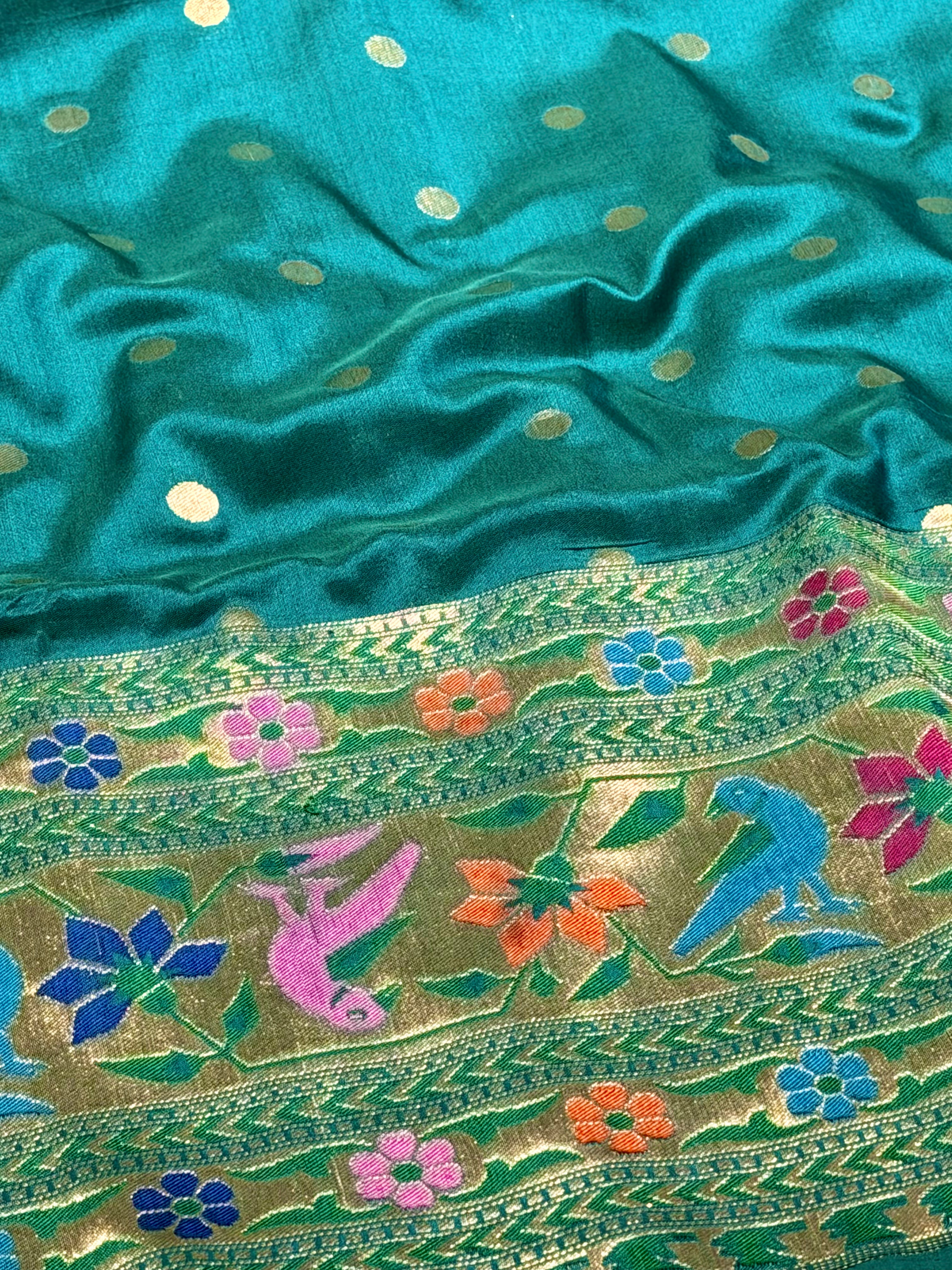
Paithani
Paithani is a weaving style known for its rich borders and decorative pallu. It uses zari threads to create a base design, with coloured threads added to form detailed motifs within the fabric.
The weaving requires careful placement of threads to maintain the design and balance of colours. The result is a fabric with a rich look and detailed patterns, especially in the pallu and border.