Double Ikkat Explained: Why Patan Patola Is Considered a Textile Masterpiece
Introduction
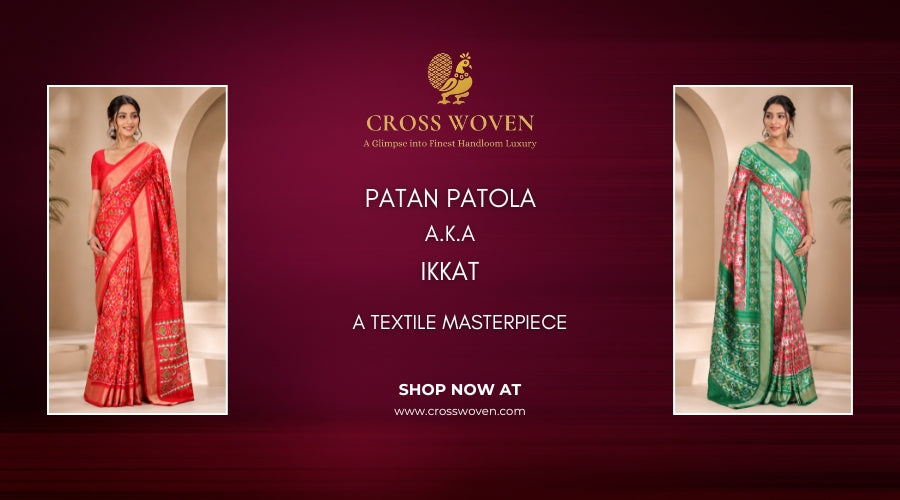
Among India’s most treasured handwoven textiles, Patan Patola holds a special place for its unmatched craftsmanship, precision, and heritage. Known as one of the finest examples of Double ikkat weaving, Patan Patola represents centuries of traditional knowledge passed down through generations. Each saree is a result of patience, mathematical accuracy, and exceptional weaving skills.
Unlike ordinary printed or single ikkat fabrics, authentic Patan Patola is created through a highly complex process where both the warp and weft threads are resist-dyed before weaving. This rare technique creates perfectly aligned patterns that appear identical on both sides of the fabric, making every piece a true textile masterpiece.
What Is Double ikkat?
Double ikkat is one of the most intricate and time-consuming weaving techniques in the world of textiles. The word “ikkat” comes from an Indonesian term meaning “to tie” or “to bind,” referring to the process of creating patterns by tying and resist-dyeing threads before weaving.
In Double ikkat, both the warp (vertical threads) and weft (horizontal threads) are carefully dyed using the resist-dyeing method before they are placed on the loom. Unlike single ikkat, where only one set of threads is dyed to create patterns, Double ikkat requires the artisan to align both warp and weft threads perfectly so that the final design appears accurately on the woven fabric.
This process demands exceptional skill, patience, and precision. Even a slight mistake in measuring, tying, or aligning the dyed threads can disturb the entire pattern. The weaver must carefully match thousands of individual threads during weaving to bring the intended motifs, geometric patterns, or traditional designs to life.
Because of its complex preparation and highly skilled craftsmanship, Double ikkat textiles are considered rare masterpieces of handloom art. The technique represents a beautiful combination of mathematical accuracy, artistic creativity, and generations of traditional knowledge passed down by skilled weavers.
The Ancient Legacy of Patan Patola
Origins in Patan, Gujarat

Patan Patola is one of India’s most celebrated handloom traditions, with a history that dates back several centuries. Originating from Patan in Gujarat, this luxurious textile is known for its extraordinary craftsmanship, vibrant colors, and complex double ikkat weaving technique. The art of creating Patola sarees flourished in Patan, where skilled artisans developed a unique method of dyeing and weaving silk threads with exceptional precision.
The making of a Patan Patola saree is a time-intensive process, often taking several months to complete. Every thread is carefully planned before weaving, preserving a tradition that has been passed down through generations.
The Salvi Weaving Community

The history of Patan Patola is deeply connected with the Salvi community, a skilled weaving community known for preserving this rare textile art. According to traditional accounts, Salvi weavers migrated to Gujarat centuries ago and established Patan as a major center for Patola production.
The Salvi artisans mastered the challenging double ikkat technique, where both warp and weft threads are individually resist-dyed before being woven together. Their dedication, patience, and technical expertise transformed Patola into a symbol of artistic excellence and cultural heritage.
Historical Patronage by Royalty and Merchants
Patan Patola gained immense recognition through the support of royal families, wealthy merchants, and elite communities. Historically, these sarees were considered a symbol of prestige, prosperity, and social status. Rulers and noble families valued Patola textiles for their intricate designs, rich colors, and unmatched craftsmanship.
Merchants also played an important role in spreading the popularity of Patola beyond Gujarat. These exquisite silk sarees became highly sought-after trade items and were exchanged across regions, including parts of Southeast Asia, where they were admired for their beauty and craftsmanship.
Through centuries of royal appreciation and artisan dedication, Patan Patola has remained a timeless masterpiece, representing the heritage, skill, and cultural identity of Indian handwoven textiles.
The Science Behind Double ikkat
The beauty of Patan Patola lies in the complex science and precision behind the Double ikkat weaving technique. Unlike regular textiles, where designs are created during weaving or printing, Patola patterns are planned much before the loom process begins.
In Double ikkat, both the warp and weft threads are resist-dyed separately before weaving. The threads are carefully tied and dyed multiple times using the resist-dyeing method, where certain sections are protected from absorbing color. This creates the foundation of the intricate patterns that appear when the threads come together.
The most challenging part of this process is the perfect alignment of warp and weft threads. Every colored section must match precisely during weaving to form the intended design. The weaver carefully adjusts each thread by hand, requiring years of experience and exceptional skill.
Even a tiny mistake in alignment can disturb the entire pattern, causing motifs to look uneven or distorted. This extreme accuracy is what makes Patan Patola one of the most technically advanced and valuable handwoven textiles in the world.
Signature Motifs Found in Patola Weaves
Patan Patola sarees are admired for their symbolic and artistic motifs, each reflecting the rich cultural heritage of Gujarat. Traditional designs are created through careful planning and precise weaving techniques.
Geometric Patterns
Geometric shapes are among the most recognizable elements of Patola weaving. Symmetrical arrangements of squares, diamonds, and abstract forms create a balanced and visually striking appearance.
Floral Designs
Inspired by nature, floral motifs add elegance and beauty to Patola sarees. These designs often represent prosperity, growth, and the connection between traditional art and the natural world.
Elephant Motifs
Elephants are considered symbols of strength, wisdom, and royalty in Indian culture. Their presence in Patola designs reflects the historic association of these textiles with royal families and celebrations.
Parrot Motifs
Parrot designs are popular in traditional Patola patterns and symbolize love, beauty, and good fortune. These motifs add a lively and graceful touch to the fabric.
Nari Kunj Designs
Nari Kunj is one of the most unique and detailed Patola motifs, featuring human figures surrounded by decorative elements. This design represents traditional storytelling through textile art and showcases the exceptional creativity of Patola artisans.
Together, these motifs transform Patan Patola into more than just a saree—it becomes a masterpiece of heritage, craftsmanship, and artistic expression.
Patan Patola vs Modern ikkat Sarees
Although both Patan Patola and modern ikkat sarees use the traditional resist-dyeing technique, they differ greatly in craftsmanship, weaving process, and heritage value. Patan Patola represents the highest form of double ikkat artistry, while many contemporary ikkat-inspired textiles adapt the visual style for modern fashion.
Authentic Double ikkat Patan Patola
Patan Patola, originating from Patan, is a rare handwoven textile created using the complex double ikkat technique. In this process, both the warp and weft threads are individually resist-dyed before weaving. Every thread must be carefully aligned so that the final design appears perfectly balanced on the fabric.
Traditionally crafted by the Salvi community, authentic Patan Patola sarees require months of skilled work. The intricate geometric patterns, floral motifs, animal designs, and traditional symbols are created entirely through precise planning and weaving. The designs are identical on both sides of the saree, making genuine Patola highly valued among textile collectors.
Modern ikkat Sarees
Modern ikkat sarees are inspired by the traditional ikkat dyeing style but are often created using simpler weaving methods. Many contemporary versions use single ikkat techniques, where only the warp or weft threads are dyed before weaving. Some designs may also use digital printing or machine-assisted processes to recreate the appearance of ikkat patterns.
These sarees are more accessible, available in a wider range of colors, and designed to suit everyday fashion trends. While they capture the beauty of ikkat patterns, they generally do not involve the same level of precision, time, or traditional craftsmanship found in authentic Patan Patola.
Key Differences
-
Weaving Technique: Patan Patola uses true double ikkat, while many modern ikkat sarees use single ikkat or printed adaptations.
-
Craftsmanship: Patola requires exceptional skill and detailed thread alignment; modern versions focus more on design and affordability.
-
Time & Value: Authentic Patan Patola can take several months to create, making it a heritage textile, whereas modern ikkat sarees are produced faster.
-
Design Accuracy: Traditional Patola motifs are carefully mapped and symmetrical, while contemporary ikkat patterns may have more flexibility.
Patan Patola is not just a saree but a symbol of India’s textile heritage and weaving excellence. Modern ikkat sarees keep the artistic influence alive by bringing ikkat-inspired designs into contemporary wardrobes, but the craftsmanship and legacy of authentic double ikkat Patola remain unmatched.
Why Katan Silk Enhances ikkat Weaves
-
Rich Sheen of Pure Silk:
Katan Silk adds a natural shine and luxurious finish to ikkat weaves, giving the fabric a refined and premium look. -
Better Colour Vibrancy:
The fine silk fibres absorb dyes beautifully, making ikkat patterns appear brighter, sharper, and more visually appealing. -
Elegant Drape:
The smooth texture and lightweight nature of Katan Silk create a graceful fall, making the saree comfortable and sophisticated to wear. -
Longevity:
Known for its strength and durability, Katan Silk helps ikkat sarees maintain their beauty and quality for years, making them timeless wardrobe treasures.
Styling a Katan Silk ikkat Saree for Modern Occasions
-
Weddings
-
Perfect for bridal functions, receptions, and traditional celebrations.
-
Pair with silk blouses featuring zari work, embroidery, or statement sleeves.
-
Enhance the royal look with gold jewellery, elegant hairstyles, and embellished accessories.
-
Festive Celebrations
-
Choose vibrant accessories to complement the colourful ikkat patterns.
-
Pair with contrasting blouses for a stylish festive appearance.
-
Add traditional jewellery, bangles, and a graceful drape for a classic look.
-
Formal Gatherings
-
Style with minimal accessories for a sophisticated appearance.
-
Opt for solid-colour or well-fitted contemporary blouses.
-
Complete the look with subtle makeup and elegant hairstyles.
-
Contemporary Blouse Pairings
-
Experiment with statement sleeves, high-neck blouses, and modern back designs.
-
Try crop-style or jacket blouses for a fusion-inspired look.
-
Balance traditional Katan silk craftsmanship with modern fashion trends.
Conclusion
Patan Patola is more than just a saree; it is a remarkable symbol of India’s rich textile intelligence, cultural heritage, and unmatched artistic excellence. The rare Double ikkat weaving technique represents generations of skill, patience, and precision, where every thread is carefully aligned to create a masterpiece. The use of fine silk further enhances its luxurious texture, vibrant colours, and timeless elegance.
A Katan Silk ikkat saree beautifully brings together traditional weaving heritage and modern sophistication, making it a perfect choice for those who appreciate authentic craftsmanship and refined fashion. These handcrafted textiles preserve the legacy of Indian artisans while continuing to inspire contemporary wardrobes.
At Crosswoven, we celebrate the beauty of traditional Indian weaves by bringing exquisite handloom creations closer to textile enthusiasts. Visit our stores in Varanasi to explore the elegance of authentic silk sarees and heritage-inspired collections:
GOLGHAR
K.38/1, Golghar, Ghasi Tola,
Varanasi, Uttar Pradesh – 221001
RATHYATRA
2nd Floor, Swastik City Center,
Rathyatra - Mahmoorganj Rd, Jahumandi,
Varanasi, Uttar Pradesh – 221002
Crosswoven continues to honour India’s weaving traditions by blending timeless artistry with modern elegance, making every saree a celebration of craftsmanship and culture.
Frequently Asked Questions
What is Double ikkat?
Double ikkat is a weaving technique where both warp and weft threads are resist-dyed before weaving to create precise patterns.
Is Patan Patola made from silk?
Yes, authentic Patan Patola sarees are made from fine silk, known for their richness and durability.
Why are Patola sarees expensive?
Patola sarees are expensive due to their rare Double ikkat technique, skilled craftsmanship, and months of detailed work.
How can you identify a genuine Patola weave?
A genuine Patola has symmetrical patterns, fine silk quality, and the design appears clearly on both sides.
What is the difference between ikkat and Patola?
ikkat is a weaving technique, while Patola is a traditional Double ikkat silk saree from Patan, Gujarat.
Is Katan Silk good for ikkat sarees?
Yes, Katan Silk enhances ikkat sarees with its smooth texture, rich shine, and elegant drape.